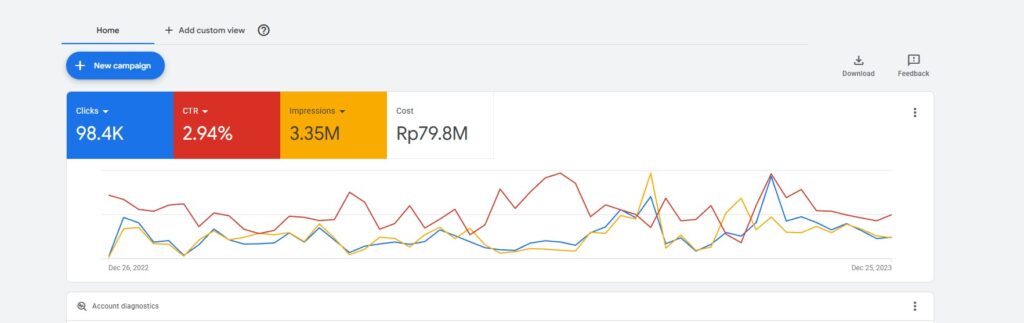
2023: Struggling to Find Qualified Leads
Campaigns generated visibility and clicks — but the leads coming in were the wrong ones.
Observed Problems
- High volume of non-enterprise inquiries
- Price-only shoppers without technical requirements
- Hobbyists and small resellers outside target market
- Broad keywords attracting irrelevant traffic
- Increased spend required to scale volume, not quality
The sales team spent more time filtering unqualified inquiries than progressing enterprise deals — a direct operational cost of poor lead targeting.
Root Cause
Campaigns relied on generic hardware keywords — server, storage, computer hardware, cheap server — that attracted volume without procurement intent.
Key Insight: Traffic volume without intent produces operational noise, not revenue.
Strategic Shift: Intent-Based Lead Generation
In late 2023, the strategy pivoted from volume-driven targeting to procurement-intent targeting.
Key Changes
- Focused on enterprise server models and solution-based queries
- Segmented campaigns by product intent vs solution intent
- Implemented layered negative keyword controls
- Introduced search term mining to identify procurement language
- Aligned ad copy with technical decision-makers
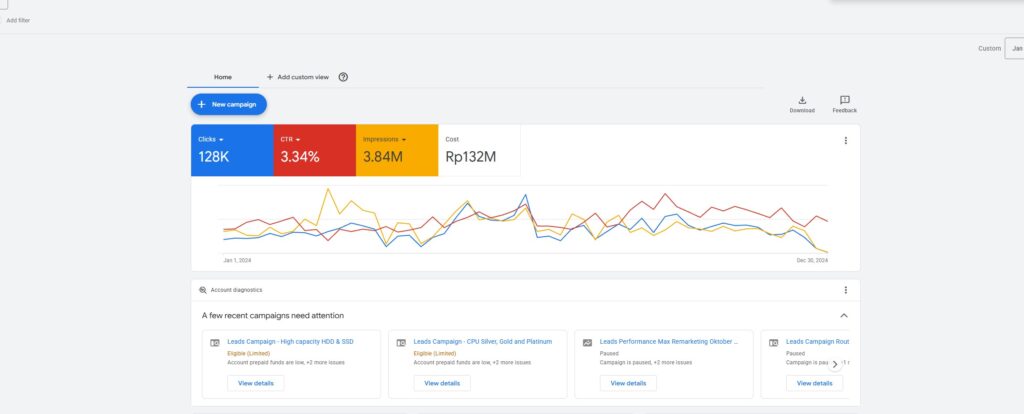
2024: Improved Lead Quality & Scalable Growth
The refined strategy produced more consistent, qualified B2B inquiries — enabling growth without increasing waste.
Improvements Observed
- Higher proportion of enterprise and multi-unit inquiries
- Reduced irrelevant traffic through negative keyword filtering
- More specification-driven conversations with buyers
- Stronger alignment between ads, landing pages, and procurement intent
- More predictable scaling without compromising lead quality
Google Search became the primary driver of high-intent leads. Meta supported top-of-funnel volume. LinkedIn enabled targeted enterprise outreach. Each channel had a defined role.
Why B2B Server Lead Generation Requires Precision
Broad reach does not work in this market. Enterprise IT buyers search with specificity — and campaigns must reflect that behavior:
- Server model and specification searches
- Compatibility and infrastructure use cases
- Vendor and supplier evaluation queries
When campaigns reflect how IT teams actually buy hardware, lead quality improves and scaling becomes sustainable.
Strategic Takeaway
The shift from generic traffic to procurement-intent targeting transformed both lead quality and operational efficiency. Core lessons:
- Volume does not equal qualified demand
- Negative keywords are critical in technical B2B markets
- Procurement intent drives scalable growth
- Alignment between ads, content, and buyer behavior is non-negotiable
Ongoing Focus
- Expanding procurement-intent keyword coverage
- Refining negative keyword layers
- Strengthening alignment with enterprise buyers
- Supporting cross-border growth in Southeast Asia
In B2B IT hardware markets, sustainable growth comes from precision targeting — not traffic volume. This case demonstrates what becomes possible when campaigns are built around how buyers actually behave.